Immutable is not the same as trusted. As instant settlement and probabilistic AI reshape banking, the uncertified ledger becomes the weak link, and a certifiable blockchain becomes the audit spine.
Payments are now the core of bank technology strategy. This is the operating model, risk frontier and revenue playbook G-SIBs need to lead the agentic, real-time cycle.
Compile-time WCAG gates, SHA-384 SRI, CSP injection and a local-first LLM pipeline set this Rust engine apart, but incremental builds, native minification and AVIF are still aspirational. Here is the honest gap analysis and the road to 1.0.
The industry finally has a global language for payments. It still does not have a global map for corporates to act on it. ISO 20022 and Swift's CBPR+ harmonised what a payment must say, not how a corporate uses it — the missing interface and behaviour layers, and how banks can build a global corporate standard on the rails they already have.
Retail banking got its API standard a decade ago. Corporate banking never did — and now that AI agents and the Model Context Protocol have turned integration into a runtime decision, the gap has stopped being a nuisance and become a fault line. A concrete failure mode, the strategic choice it forces, and what a corporate banking API standard has to mandate.
Regulators have started scanning the horizon out loud. Reading the 2026 emerging-technology landscape for banks across three converging vectors — personalised AI intelligence, synthetic financial crime, and programmable finance — and a framework for turning weak signals into supervisory action before harm scales.
Immutability is not institutional trust. The 2026 Certified Blockchain Index scores ledger governance, consensus integrity, cryptography, smart-contract assurance and audit observability on a 0–5 CMM, mapped to DORA, CPMI-IOSCO PFMI, ISO/IEC TC 307 and Basel III — turning engineering metrics into board-auditable financial truth.
Agentic AI is operational infrastructure in 2026. This index measures it the way banks measure capital and credit: a six-dimension readiness score across autonomy tiers, the control plane, regulatory evidence, unit economics, organisational readiness, and global regulatory alignment.
As of June 2026, post-quantum cryptography (PQC) has transitioned from an experimental technical concern to a primary fiduciary obligation. Boards must now oversee the systematic migration of legacy encryption...
Morgan Stanley, JPMorgan and Citi are doubling down on FINOS and the Linux Foundation. A Rust-and-zero-dependency stack — noyalib, http-handle, hsh, KyberLib — shows what the cloud-native CIB stack looks like in 2026 under PSD3, FiDA and DORA.
Agentic treasury co-pilots are moving from controlled pilots into production in 2026. The pattern is consistent across CIB treasuries: agents read ISO 20022 cash data, call bounded tools, and rebalance liquidity inside policy bands — with SR 11-7, DORA, and EU AI Act controls wrapped around them.
Corporate and investment banks now treat cyber recovery, ISO 20022 fallback rails across RTGS, instant and tokenised networks, and quantum-safe treasury controls as one always-on operating model — the board-grade response to DORA Articles 5 and 6, FHE, QKD and PQC primitives, and ICT third-party concentration risk.
Executive Order 14409, ANSSI's hard 2030 deadline and DORA Article 5 have moved post-quantum cryptography from a long-range technical goal to an active regulatory mandate. This index converts securing registries, high-frequency ledgers and SWIFT channels into a board-ready 0–5 scorecard that aligns ML-KEM, ML-DSA and SLH-DSA primitives with fiduciary liability and balance-sheet risk.
The 2026 global payments cycle is defined by three converging forces — agentic commerce, invisible embedded payments, and real-time execution — sitting on top of a tokenised unified ledger under Project Agorá and a hard November 2026 SWIFT structured-address cut-over. This piece synthesises the J.P. Morgan, Global Payments, HSBC and Payments Association 2026 outlooks into a four-pillar G-SIB operating model.
BIS Quantum Dawn and the G7 January 2026 PQC roadmap have moved post-quantum cryptography from research to board agenda. This piece extends KyberLib from a toolkit into an enterprise CIB transition programme — covering high-value rails, trade finance, custody, and the disclosures regulators are now asking for.
Cross-border corporate treasury in 2026 is a multi-rail engineering problem. ISO 20022 is the common grammar, A2A and open finance under PSD3/FiDA are the customer-facing rail, tokenised deposits handle the wholesale settlement leg, and SWIFT still anchors the long tail. The interesting work is in the orchestration layer, not the model.
ISO 20022 in 2026 is the autonomic nervous system of treasury. pain.001 and pacs.008 carry richer data than any MT message ever did. Nearly half of banks remain off-track for the November 2026 SWIFT MT/MX cut-over, structured addresses become mandatory, and agentic treasury cannot exist without MX-native APIs. This article maps the engineering reality, from CBPR+ validation rules to a real pain.001 fragment with PstlAdr fields.
In the era of GPU-accelerated decryption and DORA mandates, cryptographic rot is a systemic risk. Every legacy PBKDF2 or scrypt hash resting in a banking database is a countdown to compromise. hsh changes the paradigm with zero-downtime, memory-safe upgrades...
In 2026, web content is consumed as much by AI search crawlers, LLM-backed search engines, and Retrieval-Augmented Generation (RAG) pipelines as by human readers. Flat or malformed HTML…
The banking edge has a dependency problem. Every Nginx or Envoy instance that routes traffic between a client and a core banking service carries a dependency tree: OpenSSL builds, Lua modules,…
NoyaLib is a safer Rust YAML stack — zero unsafe blocks, 406/406 YAML 1.2 spec compliance, lossless Concrete Syntax Tree, JSON-Schema (Draft 2020-12) validation, and MCP/WASM bindings — engineered for AI agents, Kubernetes, CI/CD, and the configuration control plane behind financial infrastructure.
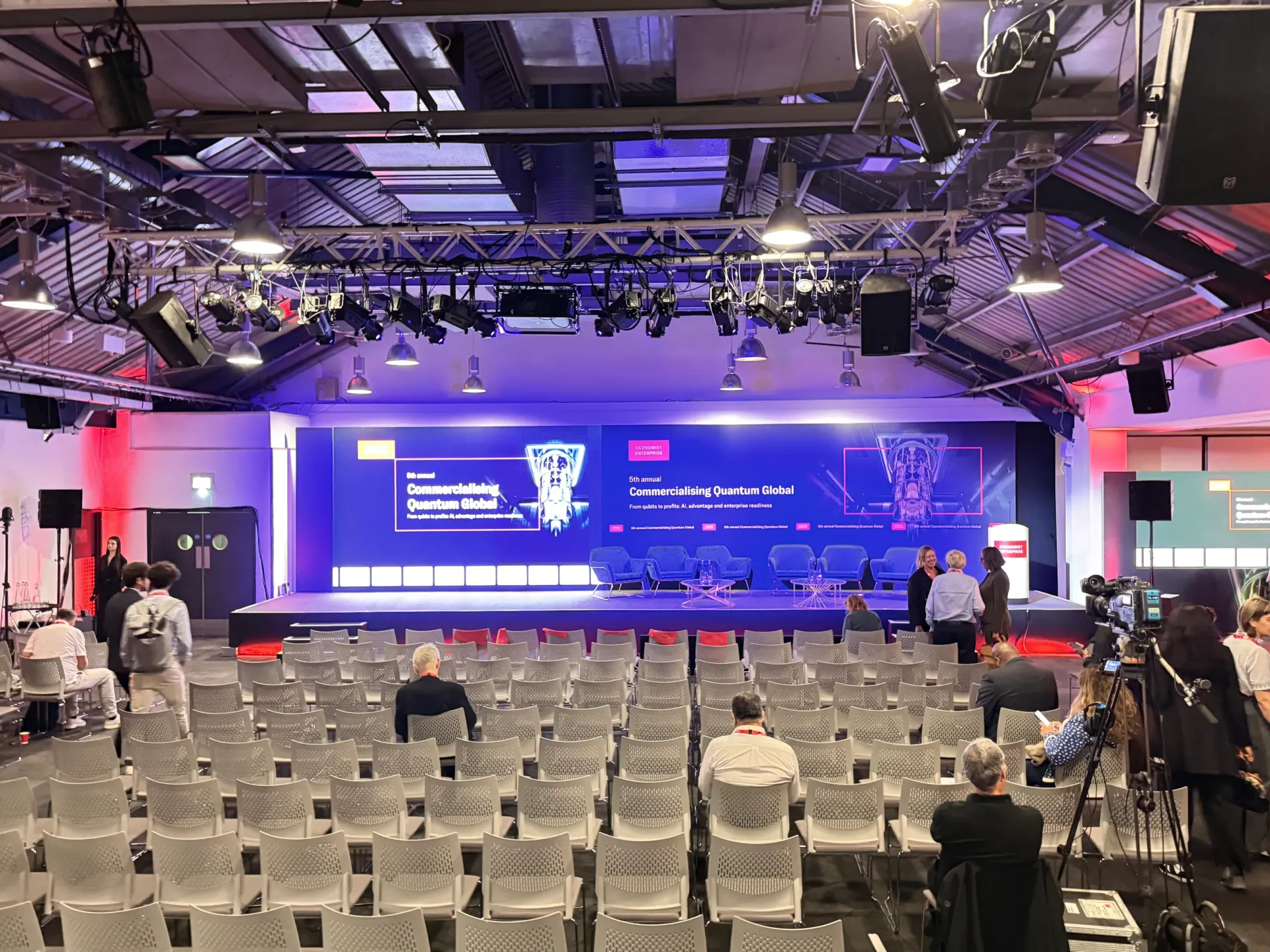
The Economist Impact 5th Annual Commercialising Quantum Global 2026 summit confirmed quantum's pivot to enterprise workflows: $1.3B raised in five months, post-quantum cryptography is a board-level fiduciary issue under SNDL harvesting, quantum sensing is shipping today for GPS-independent navigation, and HSBC's Philip Intallura delivered the directive that waiting for fault-tolerant hardware is an unforced error.
pacs008 is an open-source Python toolkit that makes ISO 20022 FI-to-FI customer credit transfer messages programmable — structured addresses, validation, routing, compliance hooks, and the SWIFT November 2026 deadline baked in as defaults.