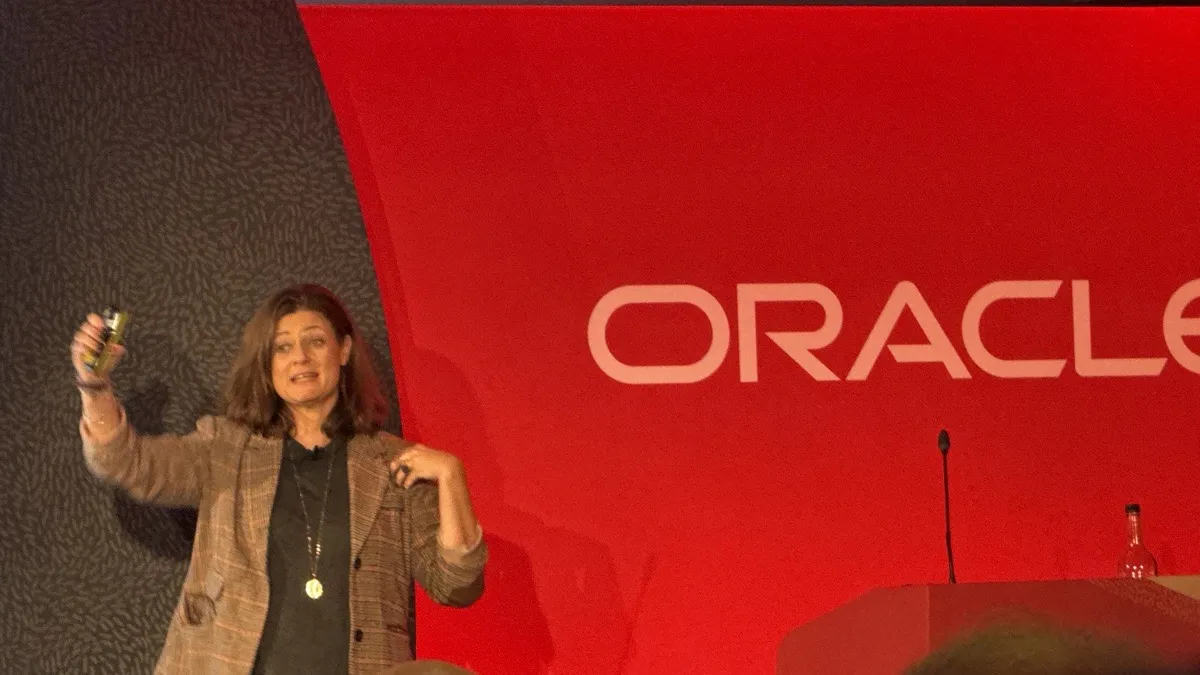
Seit 20 bis 25 Jahren behandeln Finanzdienstleister die Modernisierung als Projekt mit Enddatum. Zur Eröffnung des Oracle Financial Services Summit in London argumentierte Dr. Leda Glyptis, dass die eigentliche Schwäche der Branche...
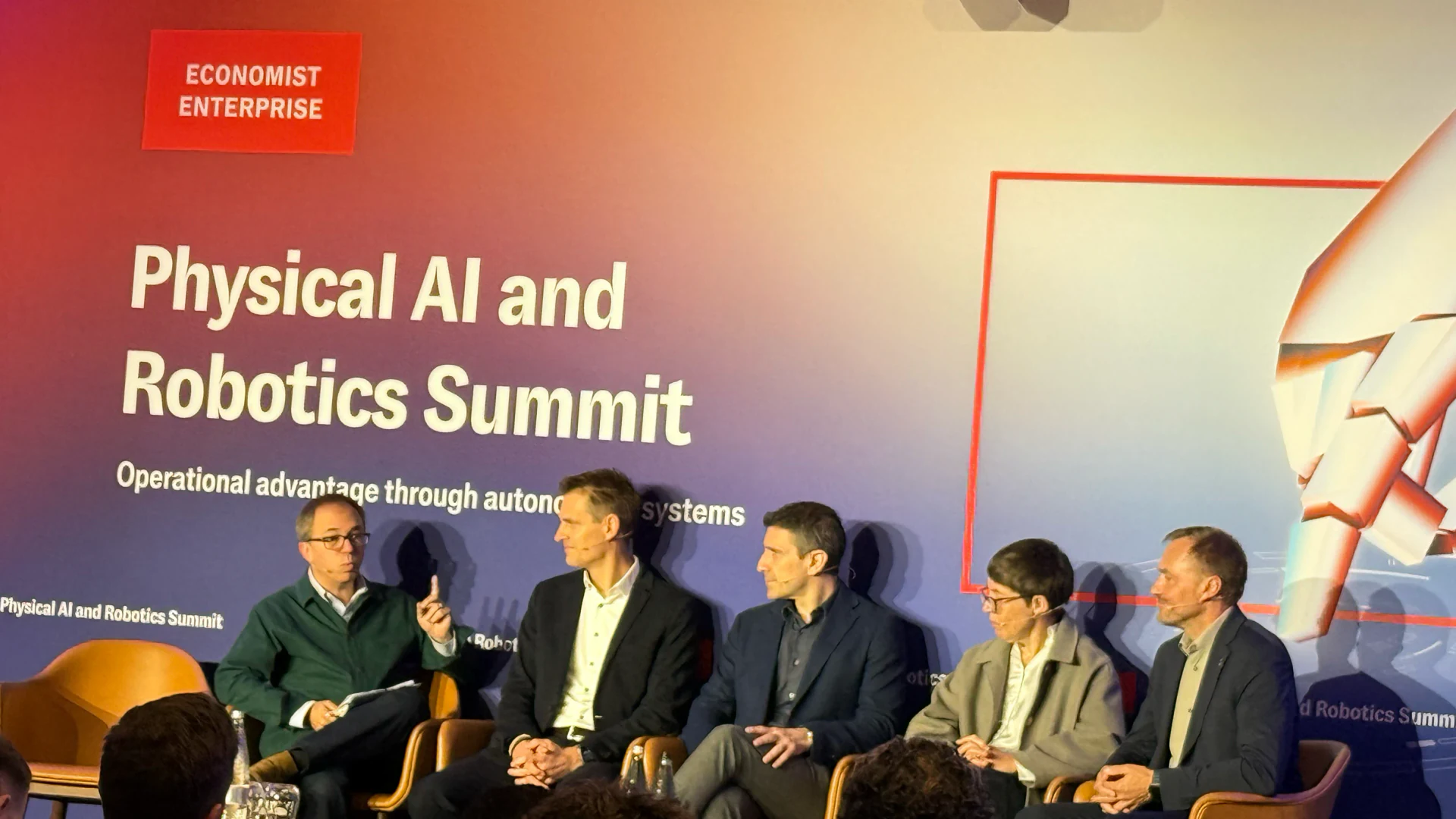
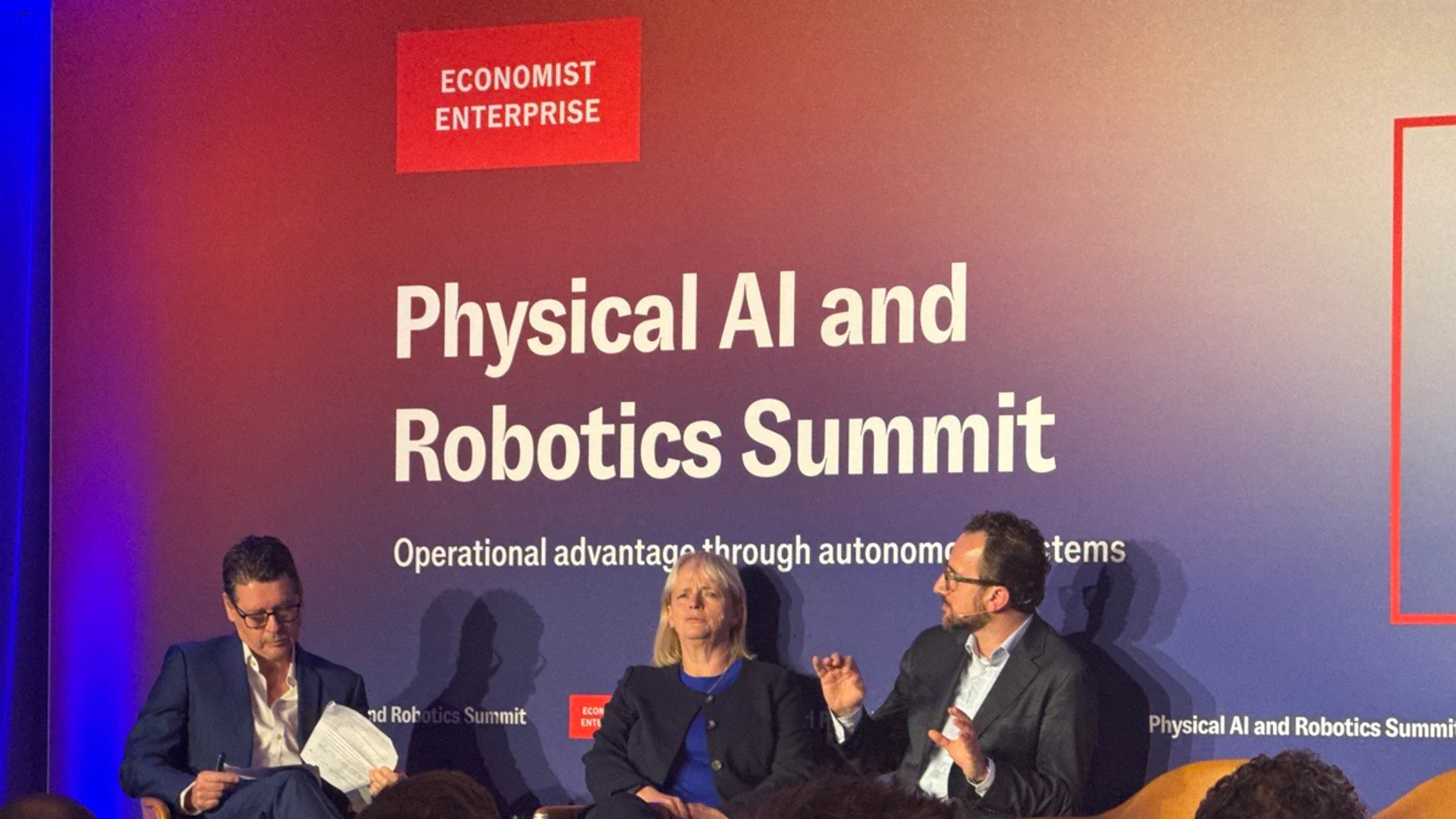
At the Economist Enterprise Physical AI and Robotics Summit in London, aerospace and manufacturing leaders dismantled the silicon-valley narrative of the general-purpose humanoid robot. While venture capital pours billions into bipedal forms, industrial reality proves that form must strictly follow function.
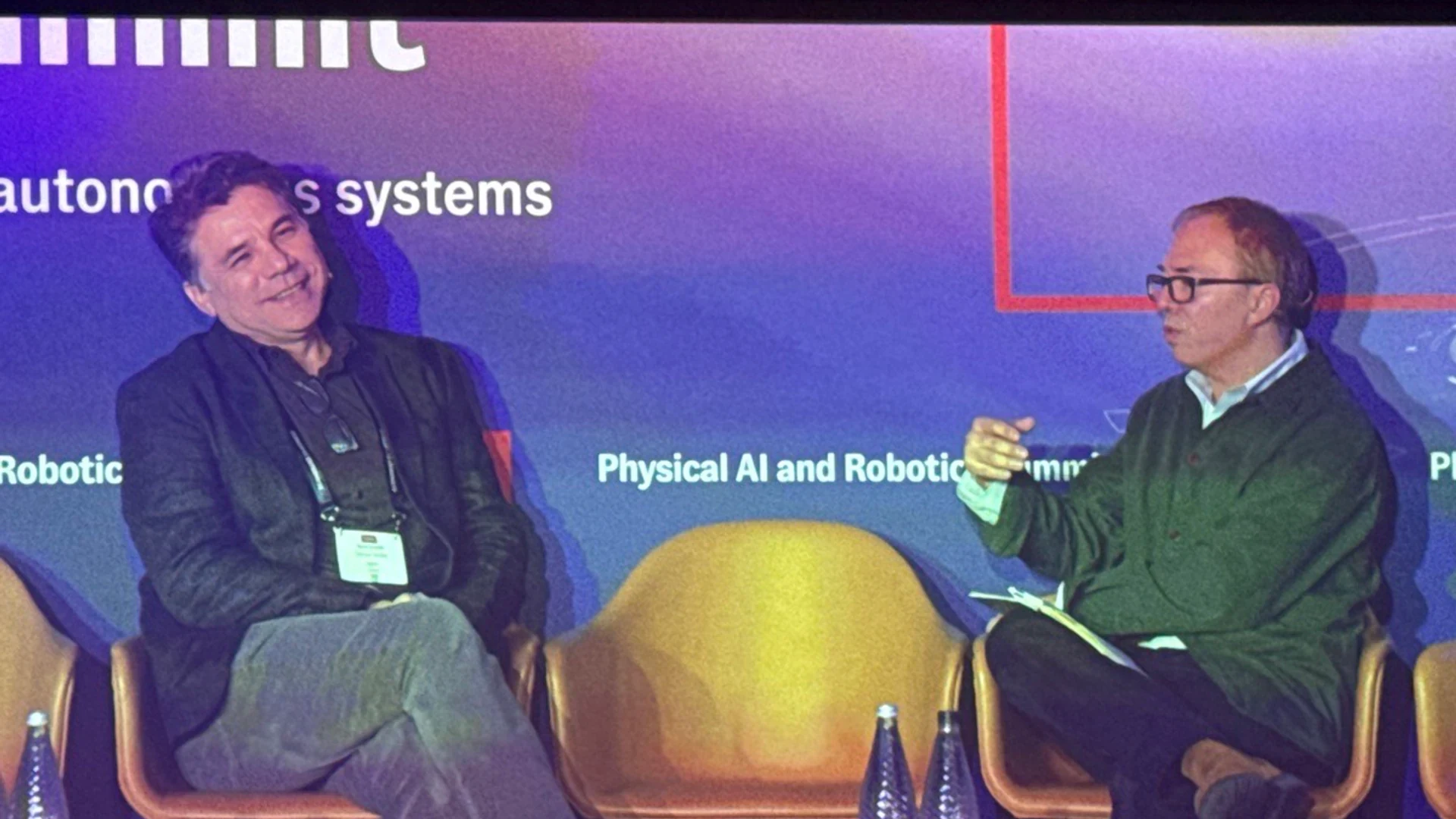
Physical AI cannot scale on 700W data-centre GPUs. At the Economist Enterprise Physical AI and Robotics Summit, Mythic AI Chairman and CEO Taner Ozcelik demonstrated how in-memory compute and chiplet modularity collapse the Von Neumann memory wall to deliver biological-grade efficiency at the physical edge.
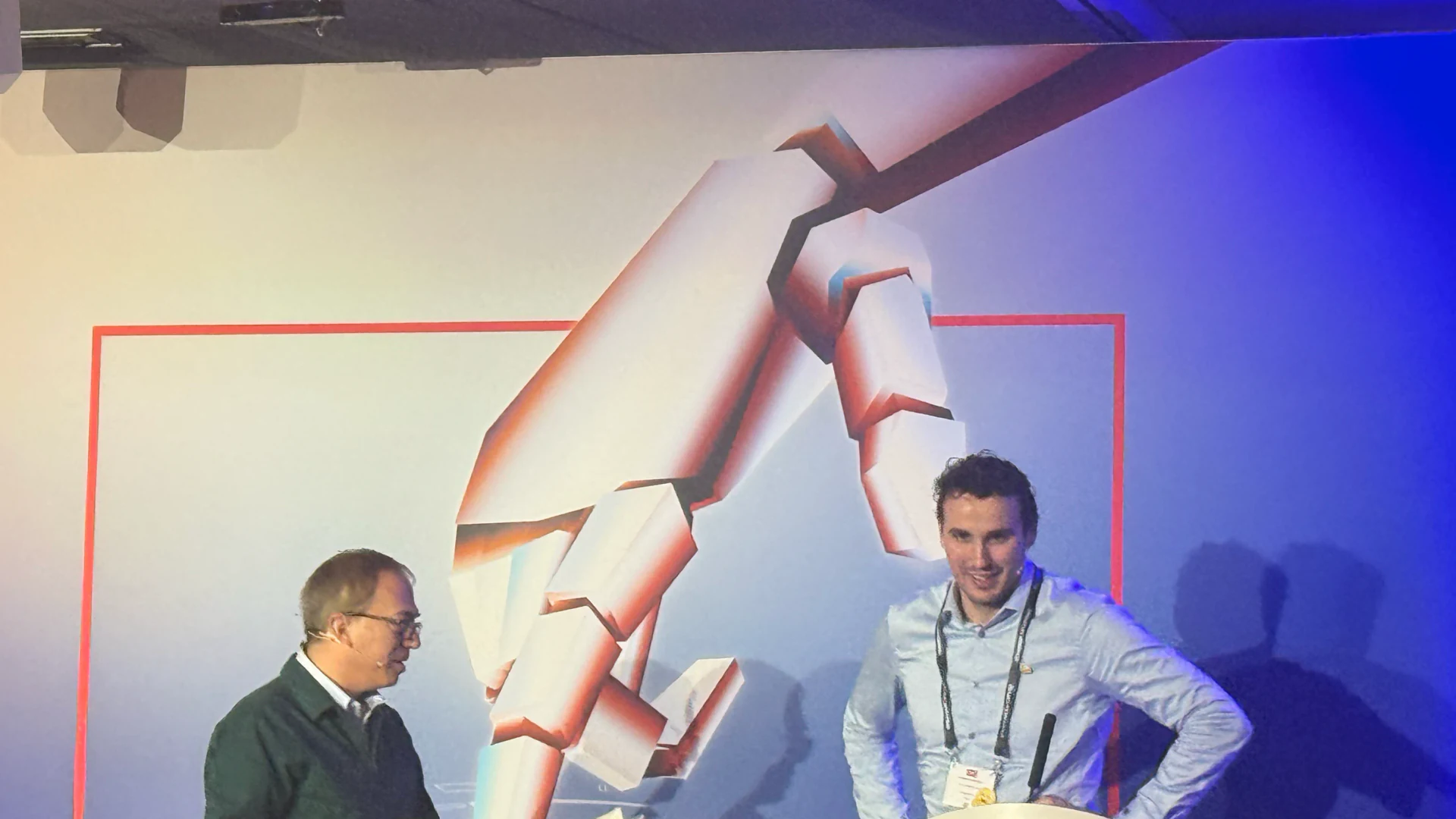
Robotics development has historically been gated behind six-figure hardware and brittle, hand-crafted kinematics. At the Economist Enterprise Physical AI and Robotics Summit, Hugging Face LeRobot lead Pepijn Kooijmans demonstrated how open-source foundation models and $200 hardware are breaking the industry wide open.
Deploying autonomous physical machines alongside human workforces introduces acute psychological and legal hazards that pure software never encountered. At the Economist Enterprise Physical AI and Robotics Summit, leaders from Kier Group and the British Standards Institution (BSI) established the governance blueprint for physical AI.
Foundations of Machine Learning, second edition, defines learning as using experience to make accurate predictions, and then builds a whole curriculum around the quantities that decide whether it works: data,...
A collection of results from an internal OpenAI model spans mathematics and theoretical computer science, and its sharpest result is exact: the asymptotic strength of the Cohn-Elkies linear program is now known,...
A detector for alignment failures that answers many typed questions in one call, with calibrated probabilities, ranks failures well and costs 63× less than LLM-judge scorers. But those probabilities don't transfer...
MIT's ad hoc committee on AI doesn't treat generative AI as a tooling problem to be patched with a policy. Its report treats it as a pressure test on what an MIT education is for, and argues that uncertainty can't be...
Cloudflare has relied on 16 partner public CAs for years without ever issuing a publicly trusted certificate itself. It now intends to become one, and the interesting part is the design: classic certificates and...
The first two operating nuclear clocks arrived together, from teams that didn't coordinate, and neither beats the best atomic clock. The independence of the two results is the more important fact, because it suggests...
Aufseher lesen seit zwei Jahren Ausstiegspläne, die einen Ausstieg unterstellen, den niemand kalkuliert, budgetiert oder geprobt hat. Im Januar steht die haltbarste Ausrede dafür nicht mehr zur Verfügung.
Finanzunternehmen haben gelernt, die NIS2-Frage mit einem Satz über DORA zu beantworten. Der Satz stimmt, und er wird gleich auf eine Verordnung angewendet, für die er nie geschrieben wurde.
Die Entlastung beim Hochrisiko-Dossier kam vor neun Tagen. Das Risiko ist nun, dass Banken eine einzige Verschiebung lesen und ein Programm abbauen, dessen eine Pflicht heute greift.
Ein Jahrzehnt lang gehörte den Banken der Login. eIDAS 2 macht Identität zu etwas, das der Kunde bei sich trägt und die Bank auf Wunsch akzeptieren muss.
Unter PSD2 konnte eine Bank allein compliant sein: Endpunkt bauen, Spezifikation veröffentlichen, fertig. FiDA kennt keinen einseitigen Weg. Compliance läuft über ein Schema — und dieses Schema wird gerade entworfen.
Fünfzehn Jahre Modellrisiko-Doktrin wurden im April neu geschrieben, und der Absatz, der für ein Risikokomitee 2026 am meisten zählt, ist jener, der sagt, welche Modelle die Leitlinien nicht abdecken.
Die meisten Banken haben den Test kalkuliert. Weniger haben die Lieferkette kalkuliert, von der er nun abhängt: einen akkreditierten Markt für Testdienstleister an einer synchronisierten Dreijahresuhr und Bedrohungsaufklärung, die jedes Mal von außen kommen muss.
Jede Post-Quanten-Roadmap setzt ein Inventar voraus, das es nicht gibt. Das Asset-Register kennt den Server, den Eigentümer und die Kritikalität; es kennt nicht den Algorithmus, die Schlüssellänge, die Bibliothek oder das Ablaufdatum.
Die Prüfung des Zahlungsempfängers ist keine Funktion mehr, sondern Pflicht. Es bleibt ein Betriebsproblem: fünf Sekunden Budget, Close Matches, Sammeldateien.
Unveränderlich ist nicht dasselbe wie vertrauenswürdig. Während Sofortabwicklung und probabilistische KI das Bankwesen umformen, wird das unzertifizierte Hauptbuch zum schwachen Glied und eine zertifizierbare Blockchain zum Audit-Rückgrat.
Zahlungsverkehr ist heute Kern der Bank-Technologiestrategie: Betriebsmodell, Risikofront und Ertragsplaybook für den agentischen Echtzeitzyklus der G-SIBs.
SHA-384-SRI, CSP-Injektion, WCAG-Gates zur Compile-Zeit und eine lokale LLM-Pipeline heben diese Rust-Engine ab. Die ehrliche Lückenanalyse und der Weg zur 1.0.
Die Branche hat endlich eine globale Sprache für Zahlungen. Sie hat noch immer keine globale Landkarte, nach der Unternehmen handeln können. ISO 20022 und Swifts CBPR+ harmonisierten, was eine Zahlung aussagen muss, nicht ihre Nutzung durch Unternehmen — die fehlenden Schnittstellen- und Verhaltensschichten und wie Banken auf den bestehenden Schienen einen globalen Corporate-Standard aufbauen.