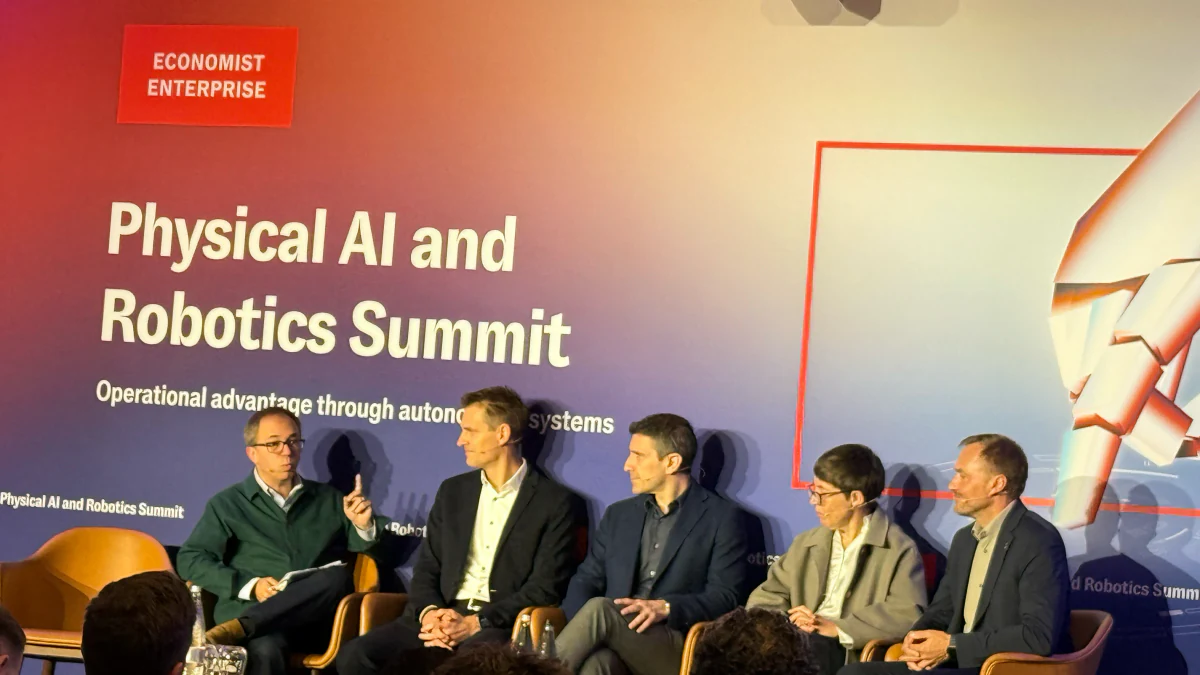
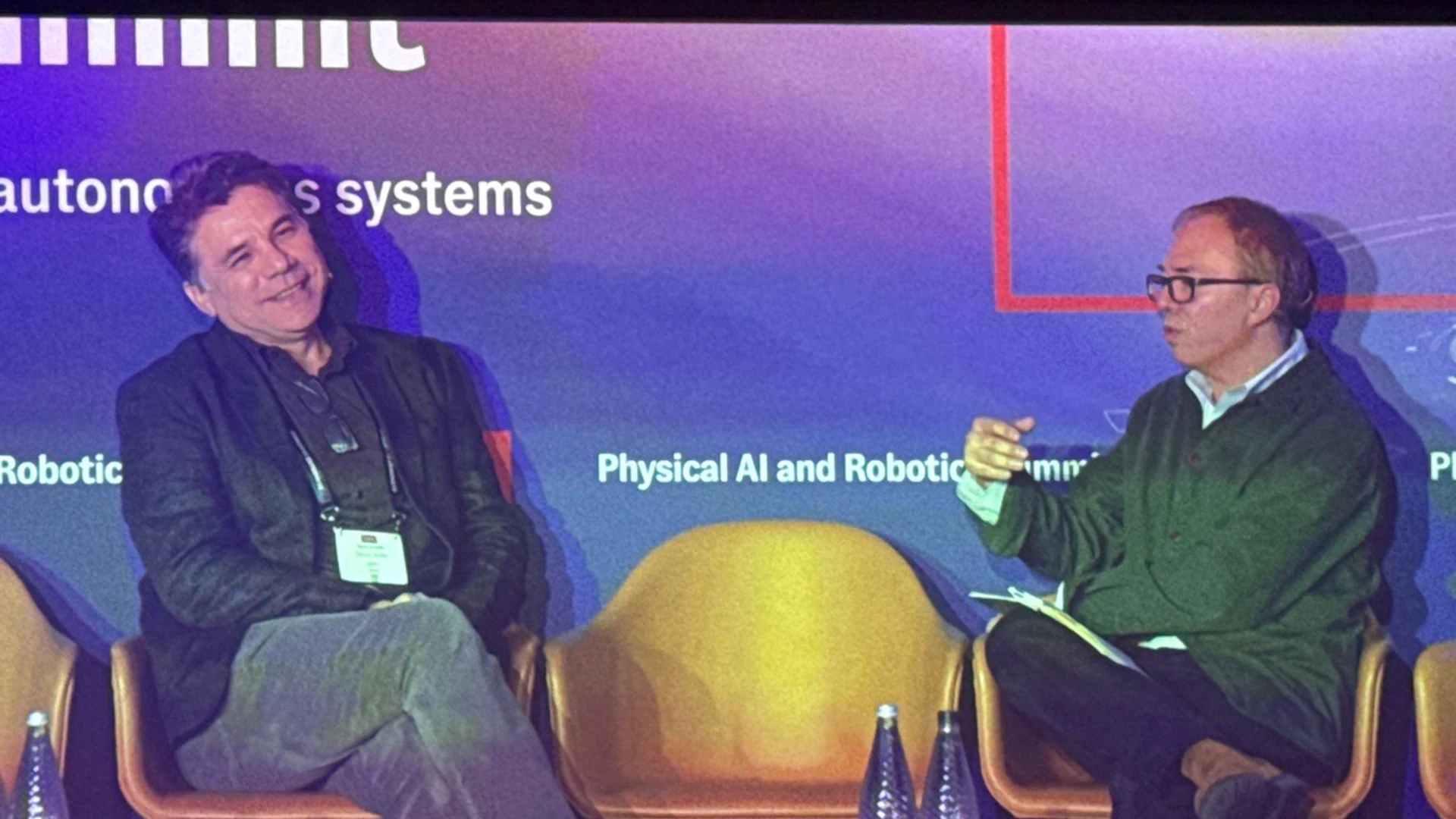
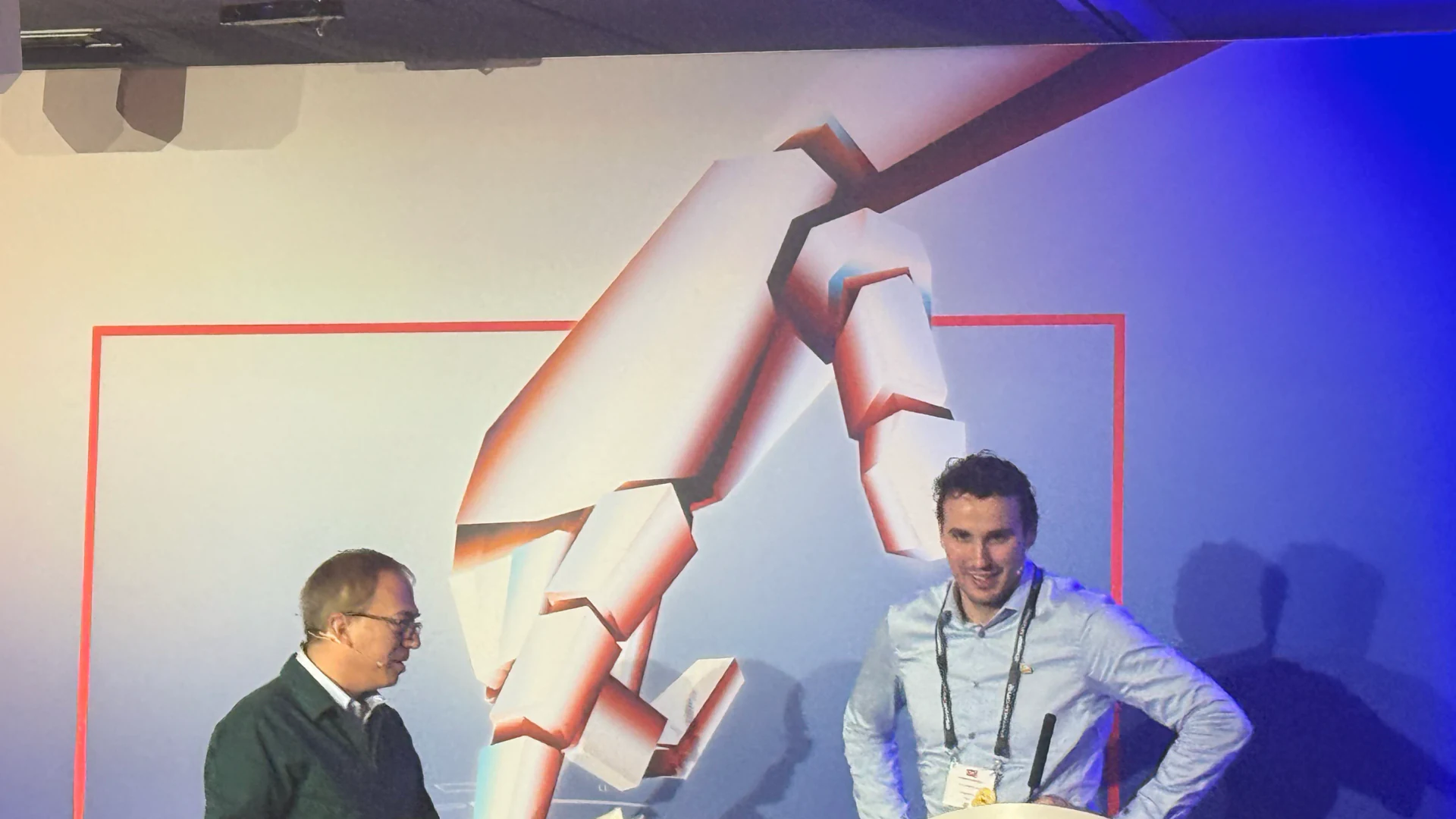
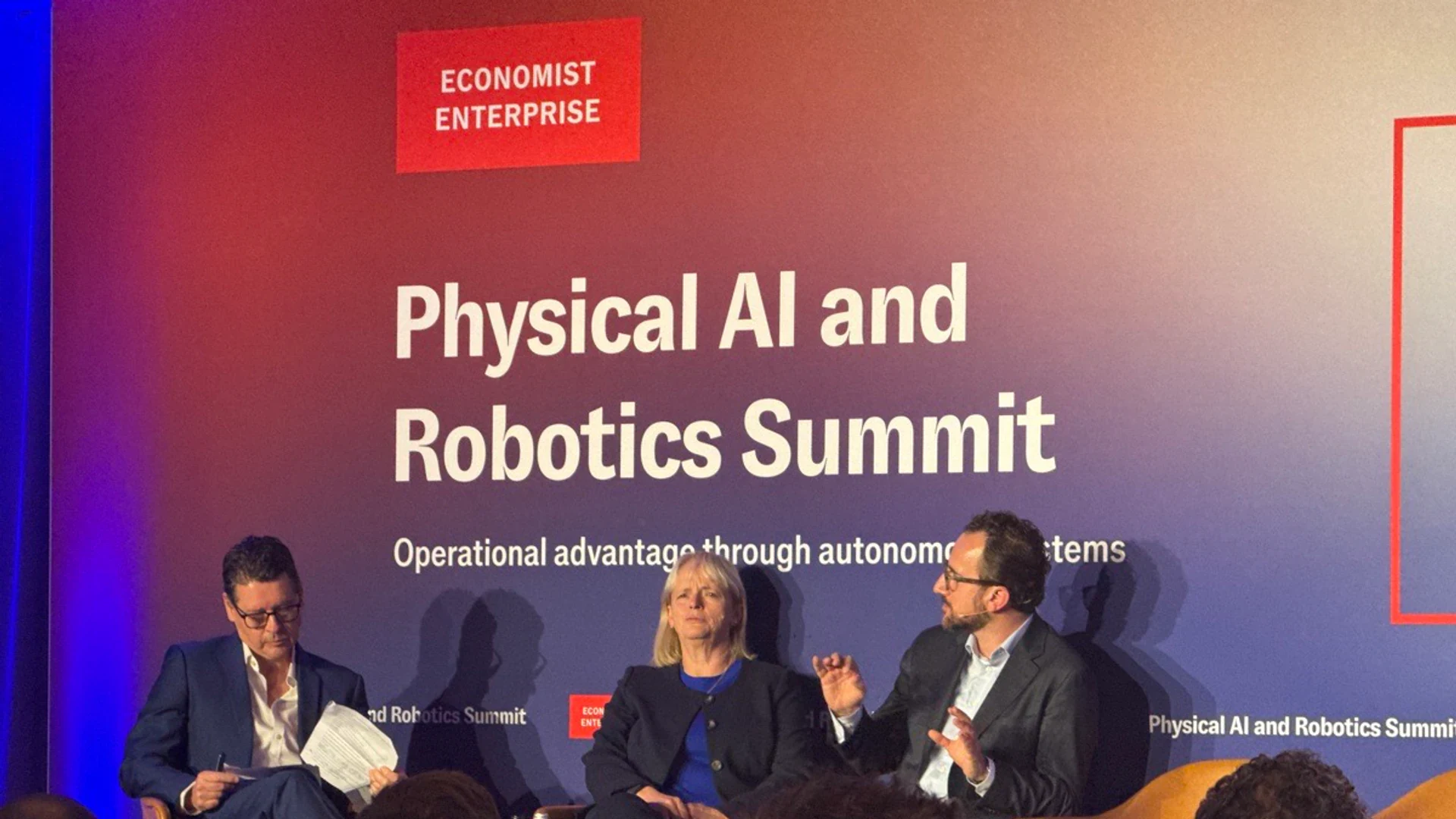
At the Economist Enterprise Physical AI and Robotics Summit in London, aerospace and manufacturing leaders dismantled the silicon-valley narrative of the general-purpose humanoid robot. While venture capital pours billions into bipedal forms, industrial reality proves that form must strictly follow function.
Physical AI cannot scale on 700W data-centre GPUs. At the Economist Enterprise Physical AI and Robotics Summit, Mythic AI Chairman and CEO Taner Ozcelik demonstrated how in-memory compute and chiplet modularity collapse the Von Neumann memory wall to deliver biological-grade efficiency at the physical edge.
Robotics development has historically been gated behind six-figure hardware and brittle, hand-crafted kinematics. At the Economist Enterprise Physical AI and Robotics Summit, Hugging Face LeRobot lead Pepijn Kooijmans demonstrated how open-source foundation models and $200 hardware are breaking the industry wide open.
Deploying autonomous physical machines alongside human workforces introduces acute psychological and legal hazards that pure software never encountered. At the Economist Enterprise Physical AI and Robotics Summit, leaders from Kier Group and the British Standards Institution (BSI) established the governance blueprint for physical AI.
Foundations of Machine Learning, second edition, defines learning as using experience to make accurate predictions, and then builds a whole curriculum around the quantities that decide whether it works: data,...
A collection of results from an internal OpenAI model spans mathematics and theoretical computer science, and its sharpest result is exact: the asymptotic strength of the Cohn-Elkies linear program is now known,...
A detector for alignment failures that answers many typed questions in one call, with calibrated probabilities, ranks failures well and costs 63× less than LLM-judge scorers. But those probabilities don't transfer...
MIT's ad hoc committee on AI doesn't treat generative AI as a tooling problem to be patched with a policy. Its report treats it as a pressure test on what an MIT education is for, and argues that uncertainty can't be...
Cloudflare has relied on 16 partner public CAs for years without ever issuing a publicly trusted certificate itself. It now intends to become one, and the interesting part is the design: classic certificates and...
The first two operating nuclear clocks arrived together, from teams that didn't coordinate, and neither beats the best atomic clock. The independence of the two results is the more important fact, because it suggests...
Toezichthouders lezen al twee jaar exitplannen die uitgaan van een exit die niemand heeft geprijsd, begroot of geoefend. In januari houdt het meest duurzame excuus daarvoor op te bestaan.
Financiële entiteiten leerden de NIS2-vraag met één zin over DORA te beantwoorden. Die zin klopt, en hij wordt zo meteen toegepast op een verordening waarvoor hij nooit is geschreven.
De verlichting op het hoogrisicodossier kwam negen dagen geleden. Het risico is nu dat banken één uitstel lezen en een programma afbouwen waarvan één verplichting vandaag ingaat.
Onder PSD2 kon een bank alleen voldoen: endpoint bouwen, specificatie publiceren, klaar. FiDA kent geen unilaterale route. Naleving loopt via een regeling.
Vijftien jaar modelrisicodoctrine werd in april herschreven, en de alinea die voor een risicocommissie in 2026 het zwaarst weegt, is die welke zegt welke modellen de toezichtsrichtlijn níét dekt.
De meeste banken hebben de test doorgerekend. Minder de keten eronder: geaccrediteerde testaanbieders op één driejaarsklok, en dreigingsinformatie van buiten.
Elke post-quantumroadmap gaat uit van een inventaris die niet bestaat. Het assetregister kent de server, de eigenaar en de kriticiteit; het kent het algoritme, de sleutellengte, de bibliotheek en de vervaldatum niet.
Controle van de begunstigde is geen commercieel kenmerk meer, maar een operationeel vraagstuk: vijf seconden, een dubbelzinnig middenantwoord en batchbestanden.
Onveranderlijk is niet hetzelfde als vertrouwd. Nu directe afwikkeling en probabilistische AI het bankwezen hervormen, wordt het ongecertificeerde grootboek de zwakke schakel en een certificeerbare blockchain de auditruggengraat.
Betalingen vormen nu de kern van de technologiestrategie van banken. Dit is het operating model, de risicogrens en het inkomstendraaiboek voor G-SIB's.
Compile-time WCAG-gates, SHA-384 SRI, CSP-injectie en lokale LLM-pipeline onderscheiden deze Rust-engine. Een eerlijke analyse van v0.0.41 en de weg naar 1.0.
De sector heeft eindelijk een wereldwijde taal voor betalingen. Er is nog steeds geen wereldkaart voor bedrijven om ernaar te handelen. ISO 20022 en Swift CBPR+ harmoniseerden wát een betaling moet zeggen, niet hóe een bedrijf die gebruikt — de ontbrekende interface- en gedragslagen, en hoe banken een wereldwijde corporate standaard bouwen op de rails die ze al hebben.
Het particulier bankieren kreeg tien jaar geleden zijn API-standaard. Het zakelijk bankieren nooit — en nu AI-agents en het Model Context Protocol van integratie een runtime-beslissing hebben gemaakt, is de kloof niet langer een ergernis maar een breuklijn geworden. Een concrete faalmodus, de strategische keuze die zij afdwingt, en wat een API-standaard voor het zakelijk bankieren moet voorschrijven.
Geen artikelen komen overeen met de huidige filters.