Supervisors have spent two years reading exit plans that assume an exit nobody has priced, budgeted or rehearsed. In January the most durable excuse for that stops being available.
Financial entities learned to answer the NIS2 question with one sentence about DORA. That sentence is correct, and it is about to be applied to a regulation it was never written for.
Relief on the high-risk file arrived nine days ago. The risk now is that banks read one deferral and stand down a programme that still has an obligation biting today.
Under PSD2 a bank could comply alone: build the endpoint, publish the spec, done. FiDA has no unilateral path. Compliance runs through a scheme, and the scheme is being designed right now.
Fifteen years of model risk doctrine was rewritten in April, and the one paragraph that will matter most to a 2026 risk committee is the one that says which models the guidance does not cover.
Most banks have costed the test. Fewer have costed the supply chain it now depends on: an accredited tester market on a synchronised three-year clock, and threat intelligence that must come from outside every single time.
Every post-quantum roadmap assumes an inventory that does not exist. The asset register knows the server, the owner and the criticality; it does not know the algorithm, the key length, the library or the expiry.
Payee verification stopped being a competitive feature the day it became a legal obligation. What remains is an operations problem: a five-second budget, an ambiguous middle answer, and corporate files that must be taken apart before they can be checked.
Immutable is not the same as trusted. As instant settlement and probabilistic AI reshape banking, the uncertified ledger becomes the weak link, and a certifiable blockchain becomes the audit spine.
Payments are now the core of bank technology strategy. This is the operating model, risk frontier and revenue playbook G-SIBs need to lead the agentic, real-time cycle.
Compile-time WCAG gates, SHA-384 SRI, CSP injection and a local-first LLM pipeline set this Rust engine apart, but incremental builds, native minification and AVIF are still aspirational. Here is the honest gap analysis and the road to 1.0.
The industry finally has a global language for payments. It still does not have a global map for corporates to act on it. ISO 20022 and Swift's CBPR+ harmonised what a payment must say, not how a corporate uses it — the missing interface and behaviour layers, and how banks can build a global corporate standard on the rails they already have.
Retail banking got its API standard a decade ago. Corporate banking never did — and now that AI agents and the Model Context Protocol have turned integration into a runtime decision, the gap has stopped being a nuisance and become a fault line. A concrete failure mode, the strategic choice it forces, and what a corporate banking API standard has to mandate.
Regulators have started scanning the horizon out loud. Reading the 2026 emerging-technology landscape for banks across three converging vectors — personalised AI intelligence, synthetic financial crime, and programmable finance — and a framework for turning weak signals into supervisory action before harm scales.
Immutability is not institutional trust. The 2026 Certified Blockchain Index scores ledger governance, consensus integrity, cryptography, smart-contract assurance and audit observability on a 0–5 CMM, mapped to DORA, CPMI-IOSCO PFMI, ISO/IEC TC 307 and Basel III — turning engineering metrics into board-auditable financial truth.
Agentic AI is operational infrastructure in 2026. This index measures it the way banks measure capital and credit: a six-dimension readiness score across autonomy tiers, the control plane, regulatory evidence, unit economics, organisational readiness, and global regulatory alignment.
As of June 2026, post-quantum cryptography (PQC) has transitioned from an experimental technical concern to a primary fiduciary obligation. Boards must now oversee the systematic migration of legacy encryption...
Morgan Stanley, JPMorgan and Citi are doubling down on FINOS and the Linux Foundation. A Rust-and-zero-dependency stack — noyalib, http-handle, hsh, KyberLib — shows what the cloud-native CIB stack looks like in 2026 under PSD3, FiDA and DORA.
Agentic treasury co-pilots are moving from controlled pilots into production in 2026. The pattern is consistent across CIB treasuries: agents read ISO 20022 cash data, call bounded tools, and rebalance liquidity inside policy bands — with SR 11-7, DORA, and EU AI Act controls wrapped around them.
Corporate and investment banks now treat cyber recovery, ISO 20022 fallback rails across RTGS, instant and tokenised networks, and quantum-safe treasury controls as one always-on operating model — the board-grade response to DORA Articles 5 and 6, FHE, QKD and PQC primitives, and ICT third-party concentration risk.
Executive Order 14409, ANSSI's hard 2030 deadline and DORA Article 5 have moved post-quantum cryptography from a long-range technical goal to an active regulatory mandate. This index converts securing registries, high-frequency ledgers and SWIFT channels into a board-ready 0–5 scorecard that aligns ML-KEM, ML-DSA and SLH-DSA primitives with fiduciary liability and balance-sheet risk.
The 2026 global payments cycle is defined by three converging forces — agentic commerce, invisible embedded payments, and real-time execution — sitting on top of a tokenised unified ledger under Project Agorá and a hard November 2026 SWIFT structured-address cut-over. This piece synthesises the J.P. Morgan, Global Payments, HSBC and Payments Association 2026 outlooks into a four-pillar G-SIB operating model.
BIS Quantum Dawn and the G7 January 2026 PQC roadmap have moved post-quantum cryptography from research to board agenda. This piece extends KyberLib from a toolkit into an enterprise CIB transition programme — covering high-value rails, trade finance, custody, and the disclosures regulators are now asking for.
Cross-border corporate treasury in 2026 is a multi-rail engineering problem. ISO 20022 is the common grammar, A2A and open finance under PSD3/FiDA are the customer-facing rail, tokenised deposits handle the wholesale settlement leg, and SWIFT still anchors the long tail. The interesting work is in the orchestration layer, not the model.
ISO 20022 in 2026 is the autonomic nervous system of treasury. pain.001 and pacs.008 carry richer data than any MT message ever did. Nearly half of banks remain off-track for the November 2026 SWIFT MT/MX cut-over, structured addresses become mandatory, and agentic treasury cannot exist without MX-native APIs. This article maps the engineering reality, from CBPR+ validation rules to a real pain.001 fragment with PstlAdr fields.
In the era of GPU-accelerated decryption and DORA mandates, cryptographic rot is a systemic risk. Every legacy PBKDF2 or scrypt hash resting in a banking database is a countdown to compromise. hsh changes the paradigm with zero-downtime, memory-safe upgrades...
A three-pillar architectural framework for Tier-1 banks and corporate treasury in 2026: cryptographic stewardship, ISO 20022 as the autonomic data substrate, and rail-agnostic orchestration — designed for DORA-grade operational resilience.
In 2026, web content is consumed as much by AI search crawlers, LLM-backed search engines, and Retrieval-Augmented Generation (RAG) pipelines as by human readers. Flat or malformed HTML…
The banking edge has a dependency problem. Every Nginx or Envoy instance that routes traffic between a client and a core banking service carries a dependency tree: OpenSSL builds, Lua modules,…
NoyaLib is a safer Rust YAML stack — zero unsafe blocks, 406/406 YAML 1.2 spec compliance, lossless Concrete Syntax Tree, JSON-Schema (Draft 2020-12) validation, and MCP/WASM bindings — engineered for AI agents, Kubernetes, CI/CD, and the configuration control plane behind financial infrastructure.
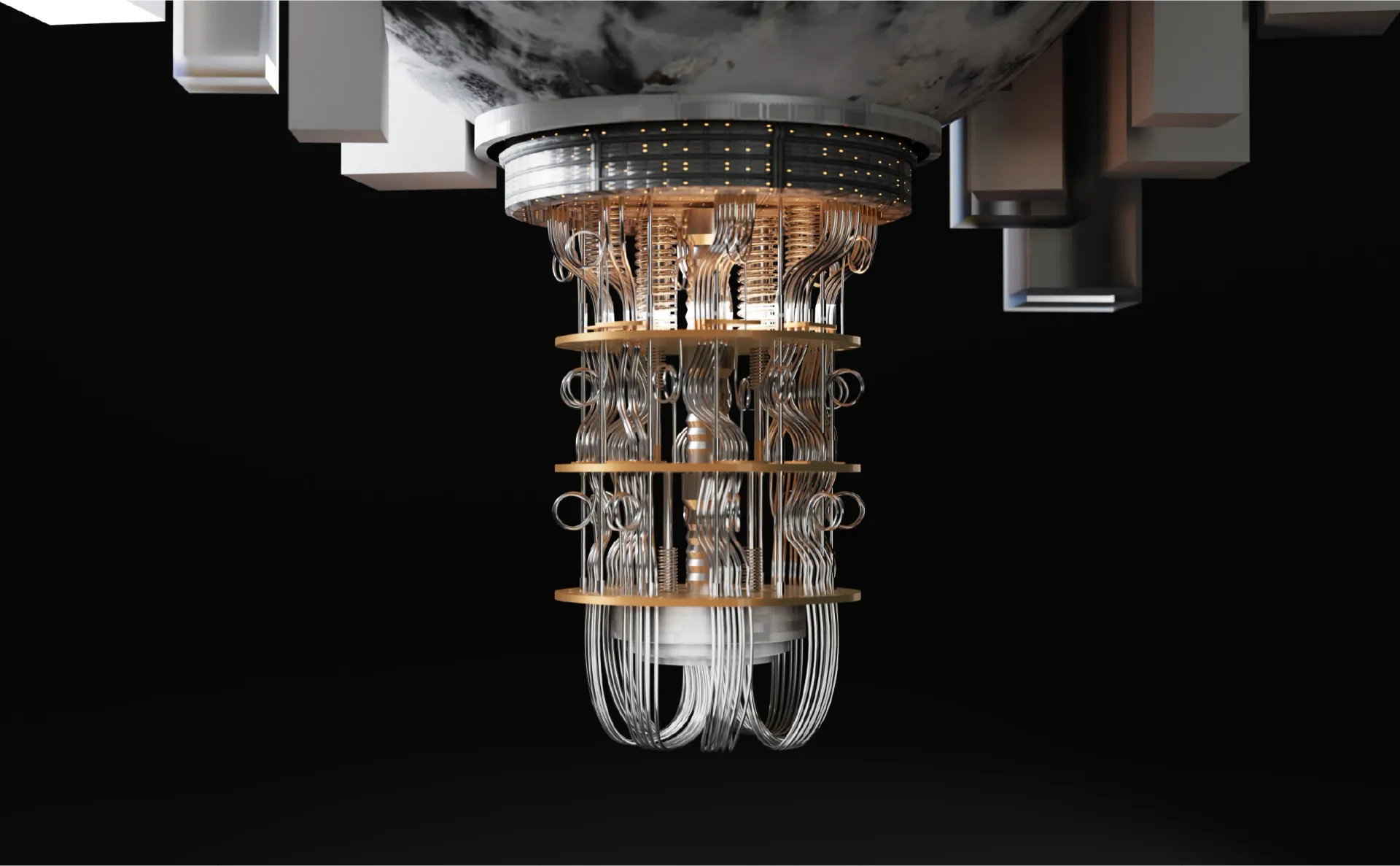
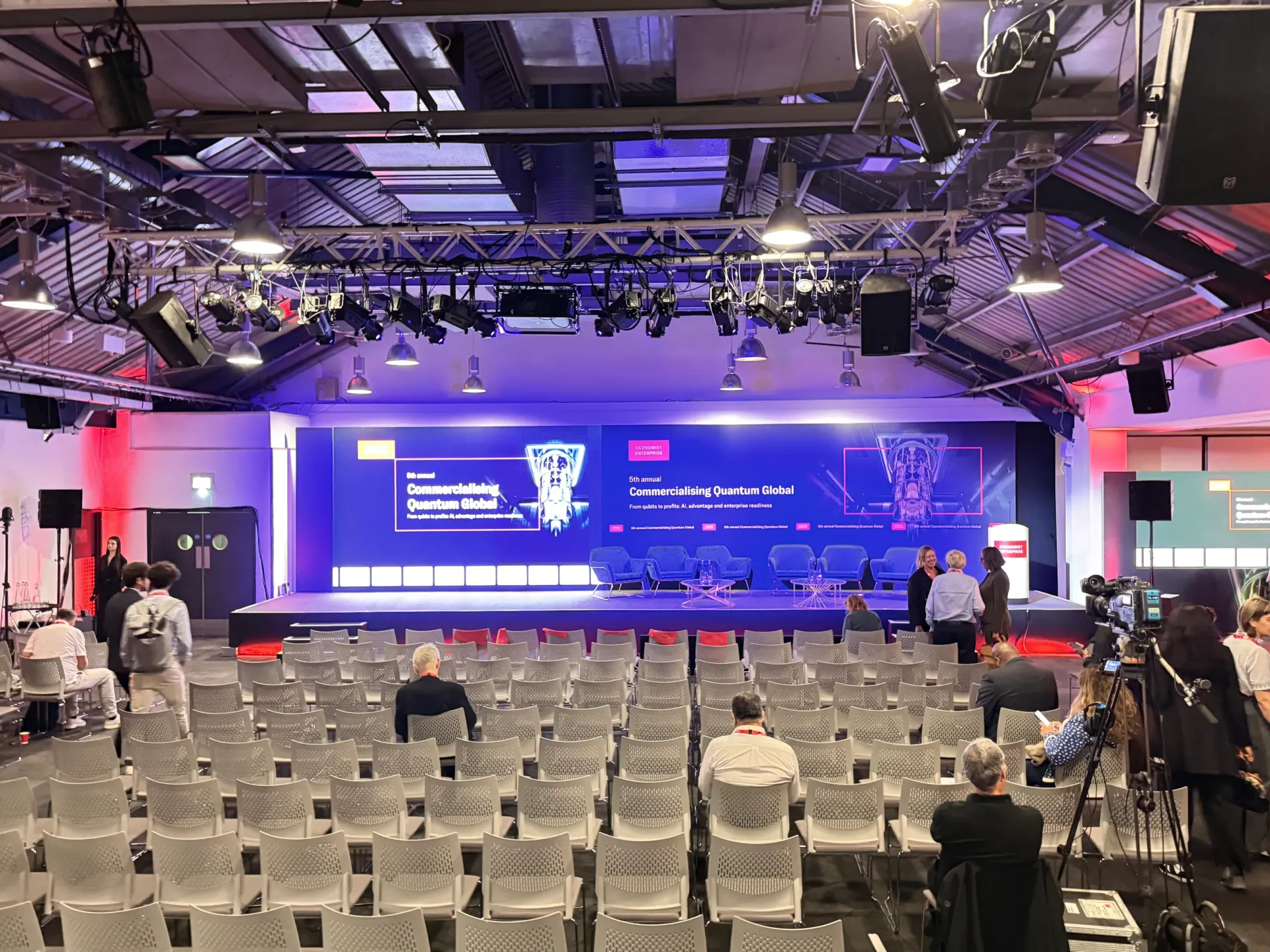
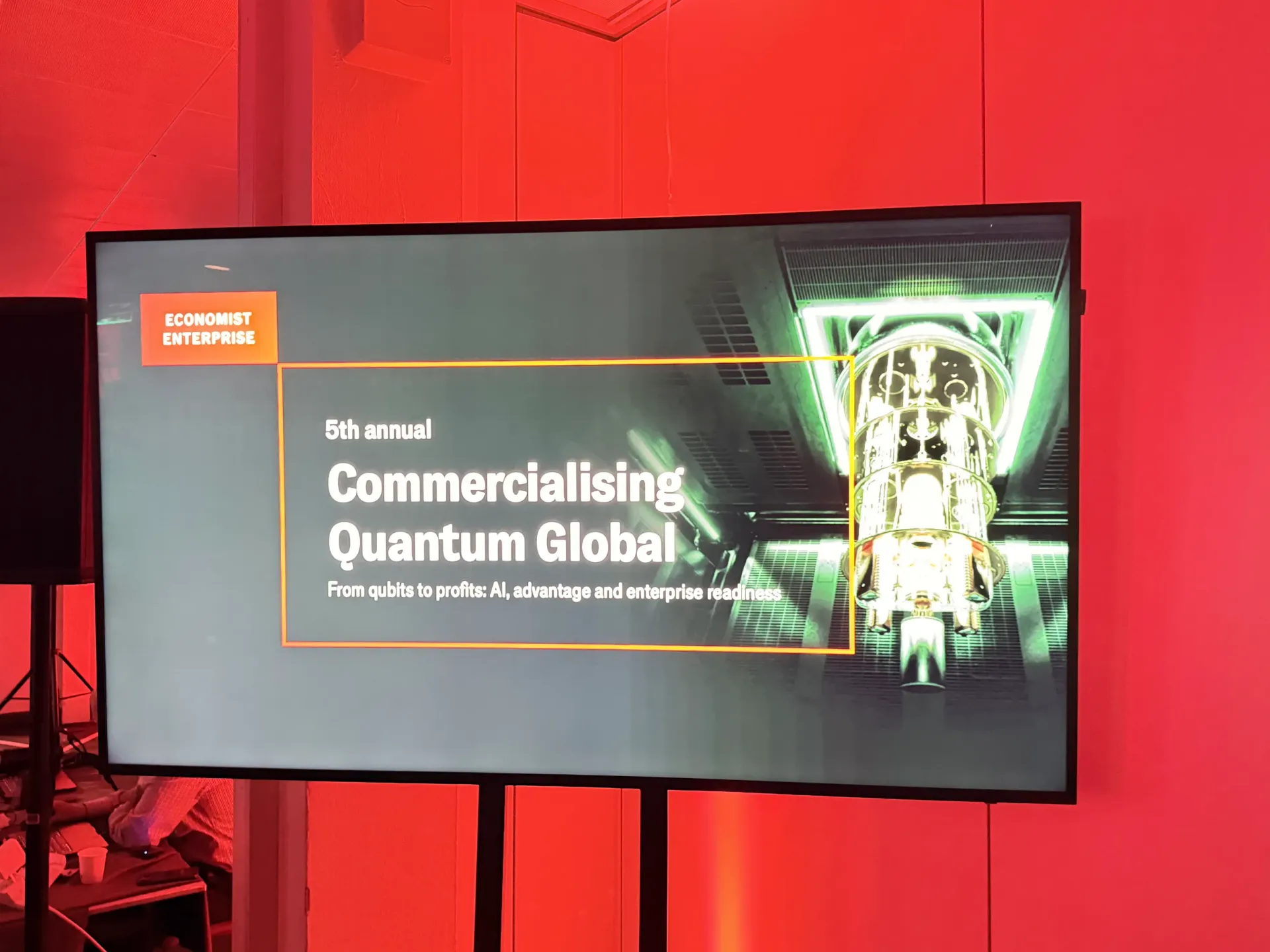
The Economist Impact 5th Annual Commercialising Quantum Global 2026 summit confirmed quantum's pivot to enterprise workflows: $1.3B raised in five months, post-quantum cryptography is a board-level fiduciary issue under SNDL harvesting, quantum sensing is shipping today for GPS-independent navigation, and HSBC's Philip Intallura delivered the directive that waiting for fault-tolerant hardware is an unforced error.
pacs008 is an open-source Python toolkit that makes ISO 20022 FI-to-FI customer credit transfer messages programmable — structured addresses, validation, routing, compliance hooks, and the SWIFT November 2026 deadline baked in as defaults.
BankStatementParser is an open-source Python toolkit that turns CAMT, PAIN.001, MT940, OFX/QFX, CSV, and scanned PDFs into a unified transaction model treasury can audit — deterministic parsers, LLM fallback, OCR, balance verification, and review.
KyberLib turns the post-quantum banking migration from policy paper into inspectable Rust — FIPS 203 ML-KEM key encapsulation, hybrid classical-plus-quantum handshakes, no_std compilation for HSMs, crypto-agile abstraction boundaries, and the DORA Article 5 governance evidence boards now need.
CloudCDN is an open-source blueprint for the AI-native edge — a zero-trust MCP gateway with 42 tools, atomic Durable Objects rate limiting, WebAuthn passkeys, signed URLs, SLSA Level 3 provenance, and 3,185 tests at 100% coverage, mapped to DORA, BCBS 239, and Basel III.
A 2026 banking resilience index — combining AI risk, cloud concentration, quantum-safe migration, payment continuity, and critical third-party dependency into one operational-resilience scoreboard the board and supervisor can both read.
A 2026 autonomous treasury readiness index — measuring agentic treasury workflows, programmable liquidity coverage, tokenised deposit integration, real-time payment orchestration, and automated cash control as one operating-model fabric.
An index framework for measuring wholesale-payments readiness in 2026: ISO 20022 structured-address compliance ahead of SWIFT's November 2026 milestone, tokenised-deposit settlement, BIS Project Agorá cross-border atomicity, real-time rail orchestration, and liquidity efficiency. Four percentages — structured-data completeness, rail-routing optimality, settlement-finality lag, and Agorá-corridor coverage — turn payment-operations posture into supervisory-ready evidence.
An engineering blueprint for cloud-native banking in DORA audit phase. Five platform-engineering primitives — Kubernetes paved roads, Backstage portal, GitOps via ArgoCD, Open Policy Agent admission, OpenTelemetry end-to-end — produce Article 8 register evidence at the speed of the pipeline. Tested exit-execution annually for CTPP-dependent CIFs against BIA-derived RTO targets. Sovereign-cloud options (AWS European Sovereign Cloud, Microsoft EU Data Boundary, Bleu, Thales / S3NS) addressed as engineering decisions, not branding.
An index framework for measuring quantum-safe banking readiness in 2026: cryptographic bill of materials, hybrid TLS deployment, NIST FIPS 203 / 204 / 205 migration progress, crypto-agility primitives, and harvest-now-decrypt-later exposure across long-lived confidential data. The Board-Level Quantum Scorecard defines four exact percentages — inventory completeness, HNDL exposure, NIST migration progress, crypto-agility readiness — that turn project statuses into supervisory-ready evidence.
An engineering blueprint for agentic AI in tier-1 banks: classify by permissions not intelligence, treat every production agent as an SR 11-7 / SS1/23 model from day one, and build the five-component control plane — OAuth-scoped service accounts, deterministic semantic routing, OPA policy gates, immutable WORM audit logs, and a tested kill switch — that turns autonomous workflows into auditable evidence.
Banking infrastructure in 2026 has reached the point where it needs an index, not another trend list. A Stanford AI Index-inspired framework for measuring bank readiness across agentic AI, quantum-safe security, cloud-native resilience, and wholesale payments — measured as one operating model.
FedNow demands pre-funded 24/7 liquidity. ACH is cheap but T+1. USDC clears atomically but needs wallet infrastructure. The 2026 multi-rail bank routes each payment by cost, finality, and liquidity cost — driven by an orchestration engine that reads ISO 20022 pacs.008 and decides.
Harvest-now-decrypt-later turns today's TLS-protected payment messages into tomorrow's decrypted exposure. ML-KEM and ML-DSA are an order of magnitude larger than the RSA and ECC keys legacy rails were sized for — retrofit triggers fragmentation, latency, and HSM exhaustion. The 2026 architectural decision is whether to patch or replace before the regulatory clock runs out.
The UK Wholesale Digital Markets Champion role makes tokenised gilts, DLT-based settlement, and digital wholesale finance a national competitiveness project. The 2026 strategic question for banks is design discipline — which tokenised assets sit on which platform, how settlement risk is evidenced, and how to defend the City's wholesale role against Singapore, Switzerland, and Frankfurt.
ISO 20022 after migration is not a project closeout — it's the start of a data-product opportunity. Structured addresses, purpose codes, invoice details, and rich status events become reconciliation, fraud, liquidity, and compliance products. The 2026 question is design discipline: which payment data carries which client workflow, priced for which corporate.
Digital assets are no longer an innovation bet. They are a settlement, custody, and balance-sheet architecture question. Crypto is a ~$3 trillion asset class, stablecoins have reached ~$300 billion, and tokenised real-world assets grew ~300% in 2025. The strategic task for banks in 2026 is not whether to engage but how to design infrastructure, controls, and governance for a world where money, assets, and settlement become programmable.
DORA, the EU AI Act, GDPR, cloud concentration risk, and data sovereignty converge into one 2026 compliance stack for banks. The strategic question is design discipline — running compliance, AI governance, ICT-resilience evidence, and sovereign-data choices as one architecture, not five parallel programmes.
The 2026 AI operating system for payments wires fraud, routing, resilience, and compliance into a single workflow-speed decisioning layer. The strategic question for banks is design discipline — which AI controls run real time on which workflow — not which point tool to pilot.
On 25 May 2026, Pope Leo XIV released Magnifica Humanitas — the first papal encyclical on artificial intelligence. Read from inside the technology industry, not as doctrine but as an ethical framework, it echoes every moral anxiety that accompanied the train, the automobile, nuclear power, and the internet, and lands on hope.
Stablecoins and tokenised deposits converge around programmable settlement but diverge on balance-sheet, legal, liquidity, and trust models. The 2026 strategic question for banks is design discipline — which money model carries which client workflow — and how to defend deposit franchise, settlement role, and regulated brand against private-issuer competition.
Programmable liquidity in 2026 connects AI forecasting, tokenised deposits, real-time rails, virtual accounts, stablecoins, and TMS into one orchestration layer for working capital. The strategic question for banks is design discipline: which data, rails, controls, liabilities, and client workflows belong together — and how to evidence the orchestration to clients and supervisors.
The UK Payments Forward Plan and April 2026 policy package set out a single framework for traditional payments, stablecoins, tokenised deposits, open banking, and agentic payments. The strategic question for banks is design discipline: which data, rails, controls, liabilities, and client workflows belong together — and how to evidence the orchestration to regulators.
Agentic payments crossed from concept to live transaction in 2026 — Mastercard and Rabobank executed a Netherlands AI-agent payment via Agent Pay, AP2-style cryptographic mandates are emerging, and HM Treasury says payment-services regulation must adapt. The banking architecture question is consent, identity, liability, and pre-settlement evidence.
The UK acid jazz renewal in 2026 spans label releases, live dates by first-wave acts, and festival programming — Acid Jazz Records, Bangs & Talbot, The Brand New Heavies, Galliano, James Taylor Quartet, and Mostly Jazz Funk & Soul Festival are all active at once.
Tokenised deposit services in 2026 are moving from research into bank pilots and early client propositions. The status is still pre-scale, but the direction is clear: commercial bank money is being adapted for programmable settlement, digital wallets…
Cloud native banking in 2026 is no longer a debate about whether banks can use cloud. It is a regulated platform-engineering discipline: how to run critical services across containers, virtual…
Wholesale payments in 2026 are no longer just bank plumbing. They are part of macroeconomic resilience, trade competitiveness, liquidity efficiency, sanctions compliance, and the strategic contest…
Quantum cryptography in 2026 has split into two practical tracks. Post-quantum cryptography is now an implementation programme, because NIST says three post-quantum standards are ready for use and…
Agentic AI has crossed from pilot into production across global banking. Seventy per cent of institutions are using it to some degree; only one in five has a mature governance model. Meanwhile,…
Cloud architecture in 2026 has crystallised around six pillars: AI-native infrastructure, intelligent multi-cloud, serverless-first design with WebAssembly at the edge, edge computing, automated…
Stablecoins cannot pay yield under the GENIUS Act. On 8 May 2026, BlackRock filed two SEC registrations for products that solve this constraint by being regulated as money market funds rather than…
Quantum risk has moved from research curiosity to active regulatory mandate. With the G7 roadmap published in January 2026, the EU, UK, and Australian timelines clarified, and the BIS Project Leap…
From mid-November 2026, SWIFT CBPR+ will reject unstructured postal addresses in pacs.008 and related cross-border payment messages. With approximately 65% of messages still non-compliant and 44%…
Twelve years after its release, Luc Besson's *Lucy* reads less like pseudo-science and more like a thought experiment about what happens when human knowledge migrates from biological to…
A new paper suggests Shor's algorithm could run on as few as 10,000 qubits. The threshold for cryptographically relevant quantum computing is dropping faster than most had assumed.